
More Than a Welcome: Onboarding That Reinforces Who We Are

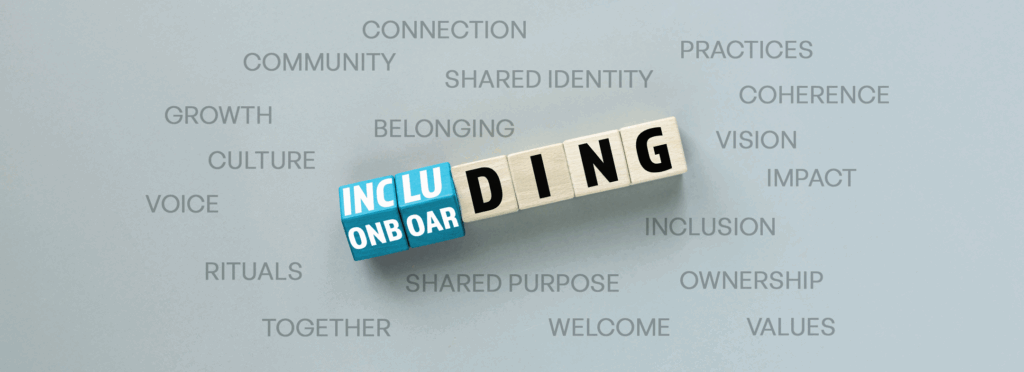
Onboarding isn’t just about handing out keys and explaining procedures. Done well, it’s a school’s first opportunity to immerse new team members in the why behind the work. It’s a chance to connect every role—every person—to a shared vision of student readiness, a shared purpose for learning, and a shared identity rooted in equity, community, and belonging.
OBJECTIVES
- Understand how onboarding supports a school’s shared vision, purpose, and identity.
- Recognize the importance of grounding onboarding in equitable and inclusive practices.
- Explore the value of teaching both universal practices and role-specific rituals and routines.
- Consider practical strategies for aligning onboarding with schoolwide culture.
- Reflect on how onboarding helps build collective ownership and long-term coherence.
When schools treat onboarding as a strategic and cultural touchpoint—not just a checklist—it becomes a vital part of sustaining who we are and how we show up for students.
A strong onboarding process isn’t just about setting up individuals for success, it’s about preserving and evolving the soul of a school. When we align onboarding with our shared purpose, we turn abstract ideas into lived experience. When we teach both the universal and the unique, we equip new staff to contribute meaningfully. And when we center equity from the start, we reinforce our commitment to readiness for all.
Why Onboarding Matters
Onboarding is a school’s first chance to model its values in action. More than logistical prep, it’s a powerful opportunity to:
- Reinforce identity and purpose by connecting each staff role to the school’s vision for student readiness.
- Build coherence by aligning new hires with key systems, rituals, and routines.
- Foster belonging through intentional relationship-building and culturally inclusive practices.
- Model equity by making expectations clear, support structures visible, and voices heard from day one.
When done thoughtfully, onboarding becomes a living expression of your school culture.
Onboarding is the ‘internal customer service’ version of making a good first impression.
-Marilyn Suttle
Practical Strategies
Here are four ways to build onboarding around your shared vision:

Start With “Why”
Ground all onboarding in your shared purpose. Don’t just explain procedures, connect them to your values. Share your vision for readiness and how every role helps achieve it.
Check out this resource on discovering your why.

Together, We Bring School Identity to Life
Onboarding is an opportunity to show—not just tell—what it means to be part of your school community. When new team members see how your shared identity shows up in routines, relationships, and decisions, they’re better able to align with it and contribute to it. At the same time, honoring the distinct responsibilities and perspectives each role brings helps reinforce that identity as something everyone shapes.
Check out this resource on supporting your team and school.

Make Equity Actionable
Model culturally inclusive practices by ensuring that language and visuals reflect the diversity of your community, providing clear access to resources, mentors, and feedback, and making space for questions, reflection, and authentic connection.
Check out this resource on inclusive practices.

Involve the Community
Don’t do it alone. Involve veteran staff, students, and families in the onboarding experience. This shows that everyone belongs and everyone leads.
Check out this resource on how to seek input from multiple constituents.
What This Looks Like in Practice
Serving & Accrediting Independent Schools (SAIS), highlights Forsyth Country Day School in Lewisville, North Carolina, where new faculty are supported through a year-long onboarding process called Faculty Fury. Each new staff member is paired with mentors and meets regularly in a cohort that explores not just the mechanics of teaching at FCDS, but the deeper why behind the school’s practices. This approach emphasizes culture over compliance, helping new educators understand the mission, identity, and expectations that shape daily life at the school. As one leader described, it’s about saying: “This is who we are, this is how we do things here—and we’re here to support you in achieving the outcomes we value.”
By intentionally connecting onboarding to school identity and by pairing mentorship with reflection, FCDS has turned the process into more than orientation—it’s a shared journey into community.
Building From What You Already Have
The best part about onboarding is that you don’t have to start from scratch. Much of what you need is already in your school’s DNA. Your vision for readiness, the way you hire, the tools you lean on for professional learning—all of these can be woven into how you welcome new people. What matters is being intentional, connecting the dots between the everyday routines and the bigger story of who you are as a school.
And that’s where reflection comes in. As leaders, we can pause and ask ourselves: Are we onboarding to our culture or just our compliance? Do new colleagues walk away from their first week feeling connected to our purpose or simply oriented to procedures? What story will they carry into their classrooms about the kind of community they’ve joined?
Check out this resource on school community, climate, culture, and identity.
Onboarding is more than a welcome, it’s an invitation. When we do it with purpose and care, we’re not just preparing new staff for their roles. We’re reminding them, and ourselves, why the work matters and how we rise together.

This work by Inflexion is licensed under Creative Commons Attribution-NonCommercial-ShareAlike 4.0 International


Stay in the Loop
Subscribe to Our Newsletter








Responses