
What Walking the Hallways Taught Me About School Leadership

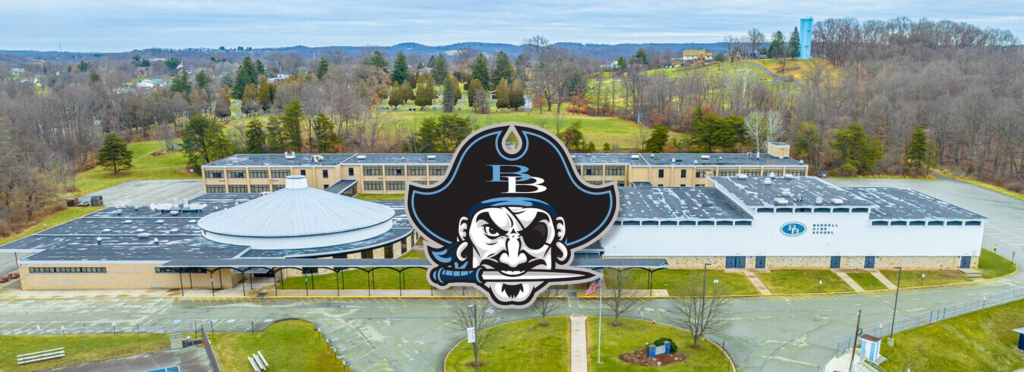
My career in education has been unconventional, and because of that, there was always a piece of the experience I felt I was missing. Through my work at Inflexion, I’ve spent years partnering with schools and districts and talking with educators and leaders about the realities of their work. I heard constantly about the challenges of balancing instructional leadership, student needs, staff support, safety concerns, and the countless interruptions that shape a school day. But despite those conversations, I had never truly been immersed inside a school building alongside leadership for an extended period of time.
OBJECTIVES
- Explore the human side of school leadership.
- Celebrate the ways schools recognize students.
- Reflect on what meaningful student support can look like.
I had never experienced the rhythm of a traditional school day firsthand. I had never spent mornings in hallways, sat in on collaborative meetings, or watched administrators navigate the nonstop demands pulling them in every direction. Over time, I realized that while I understood many of the challenges school leaders talked about, I understood them mostly from the outside looking in. I wanted to know what it actually felt like to carry the responsibility of supporting students, staff, families, and the broader school community while somehow still managing systems and moving a school forward.
Fortunately, through my partner, who works in IT for the school district where we live, I was introduced to Dr. Carla Roland, the assistant principal at Burrell High School, and Dr. John Boylan, the principal at Burrell High School. Carla welcomed me into the building and allowed me to shadow her for several days. During that time, I also had the opportunity to sit down for empathy interviews with both Carla and John.

Dr. Carla Roland, Assistant Principal at Burrell High School
Going into the experience, I expected some kind of major revelation. I thought there would be moments where everything suddenly clicked or where I would walk away with some new understanding of leadership that I had never considered before. Instead, what happened was quieter than that. The experience didn’t necessarily change my perspective as much as it deepened and confirmed it. Many of the things I had heard school leaders say over the years became much more tangible once I saw them unfolding in real time.
The Difference Between Having Time and Protecting It
One of the days I visited Burrell was during a professional development day, which I was especially interested in observing. I wanted to see what instructional leadership and teacher collaboration actually looked like inside a school.
That morning, I sat in on a presentation centered around student data and predictive indicators. The staff was discussing how they could use assessment information to better understand where students might land in future testing cycles so they could intervene earlier and provide support before students fell behind. What stood out to me was how intentional the conversations felt. The focus wasn’t just on numbers or testing; it was about trying to better support students.
Later that same day, I sat down with Carla for an empathy interview. During our conversation, she talked openly about the realities of school leadership and the emotional demands that come with trying to support students, staff, and families all at once.
When I returned for my second observation day, I was supposed to observe a math team meeting where teachers would collaborate around student data and discuss interventions together. But in a very real example of how schools operate, the meeting never happened. Teachers were pulled into IEP meetings instead. We attempted to pivot and observe another team, but that meeting was also interrupted by competing priorities.
Carla mentioned something during that moment that stayed with me for the rest of the visit: schools may have collaboration time scheduled, but they often do not have protected time.
That distinction immediately clicked for me because it captured something I had heard repeatedly from educators. Schools are filled with important work, but urgent needs constantly overtake it. Student concerns, meetings, crises, compliance requirements, parent communication, transportation issues, staffing shortages. Everything competes for attention at once.
Instead of observing meetings, Carla suggested I simply shadow her for the rest of the day. Honestly, that ended up being the most valuable part of the experience.
Twenty Feet and Three Interruptions
Within probably twenty feet of walking from her office toward the vestibule where students were arriving that morning, at least three different people stopped Carla. A teacher had a question. A student needed something. Someone else needed clarification about an issue later in the day.
What struck me wasn’t the interruptions themselves. It was how naturally she moved between them while still making every interaction feel personal and genuine.
As students walked by, Carla greeted nearly every one of them by name. She asked students about sports, prom dresses, competitions, and how their days were going. She checked in with staff members about family situations she had remembered from previous conversations. Even while talking with me, she paused constantly just to acknowledge people passing through the hallway.
It was impossible not to notice how deeply connected she was to the students and staff in the building.
As we walked through classrooms and hallways, I started realizing that school leadership is not just operational leadership. It is deeply relational work. Relationships are not secondary to the job. They are the job in many ways.
That sense of connection showed up in small ways throughout the building.
One thing that especially stood out to me was a large student-of-the-month display hanging near the front office. Each grade level had a student featured with their photo, name, and short quotes from staff members about what made them special. Some comments highlighted kindness. Others recognized leadership, perseverance, work ethic, or the positive impact students had on those around them.
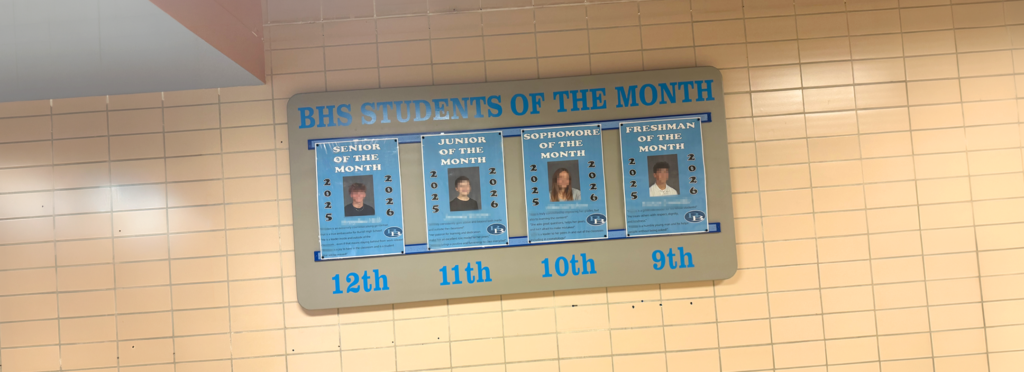
I loved that it was one of the first things you saw when walking into the building. It sat right near the front office where students, staff, families, and visitors would all pass by it throughout the day.
It was just a really thoughtful way to highlight students and say something kind about them publicly.
During our empathy interview, Carla talked about the emotional demands of leadership and how much of the work people never actually see. She spoke about constantly shifting gears throughout the day while carrying concerns about students, staff, safety, families, and systems all at once. At one point, she described waking up in the middle of the night thinking through school safety scenarios.
What stood out most to me, though, was how often she returned to belonging and connection. Again and again, she emphasized helping students feel known and supported. One line from our conversation has stayed with me ever since. She said, “Happy people don’t hurt people.” The statement wasn’t meant to oversimplify anything. If anything, it reflected how deeply she believes schools have a responsibility to strengthen people, not just systems.
Watching Carla move through her day made it obvious that leadership in schools doesn’t really shut off. There is always another concern, another problem to solve, another conversation waiting.
The Emotional Weight School Leaders Carry
John shared many of the same themes during our interview. He described school leadership as “not a job, it’s a lifestyle.” After spending time in the building, I understood exactly what he meant.
John talked about the difficulty of leading change, especially in a post-COVID environment where schools have become increasingly polarized around ideas, practices, and expectations. He also spoke openly about teacher burnout and the emotional strain educators are carrying right now.
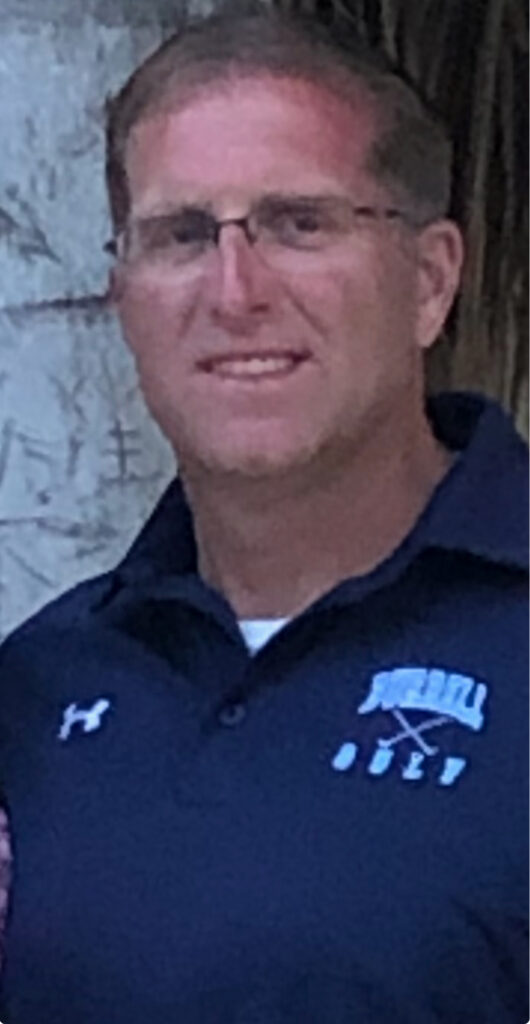
Dr. John Boylan, Principal at Burrell High School
Are my adults getting the support they need so that they can be stronger for students?
–Dr. Carla Roland
Both Carla and John spoke candidly about the emotional demands that come with trying to support students, staff, and families while also navigating systems that often feel stretched thin.
What struck me most during both interviews was that even while discussing difficult situations, staffing challenges, safety concerns, and systems-level frustrations, the conversation always returned to students.
More than anything, it showed me how deeply both Carla and John care about the students in their building. Even amid the operational complexity and constant demands of leadership, their focus consistently came back to creating an environment where students feel supported, connected, and cared for.
There is an incredible amount of operational complexity in schools, but underneath all of it are human beings trying to support other human beings.
Seeing Students Find Their Passions
As Carla continued showing me around the school, I was able to see firsthand some of the opportunities students had access to throughout the building. In the hallways, televisions displayed images from career exploration trips and student experiences. Students were being exposed to fields and careers they may never have considered otherwise.
We visited the woodshop where students were creating everything from charcuterie boards to tabletop games. But the highlight for me was the Makerspace.
Inside were 3D printers, engravers, robotics equipment, wide format printer, and all kinds of tools designed to spark creativity and curiosity. What stood out even more than the equipment itself was hearing the enthusiasm from Darcy, the Makerspace teacher, and students using it.
Darcy shared the story of a student who became so interested in 3D printing that he eventually asked for a 3D printer for Christmas. He started experimenting with designs at school, printing projects at home, and eventually selling items on Etsy.
That story stayed with me because it represented something much bigger than technology. It showed what can happen when students are given opportunities to discover interests they didn’t even know they had.
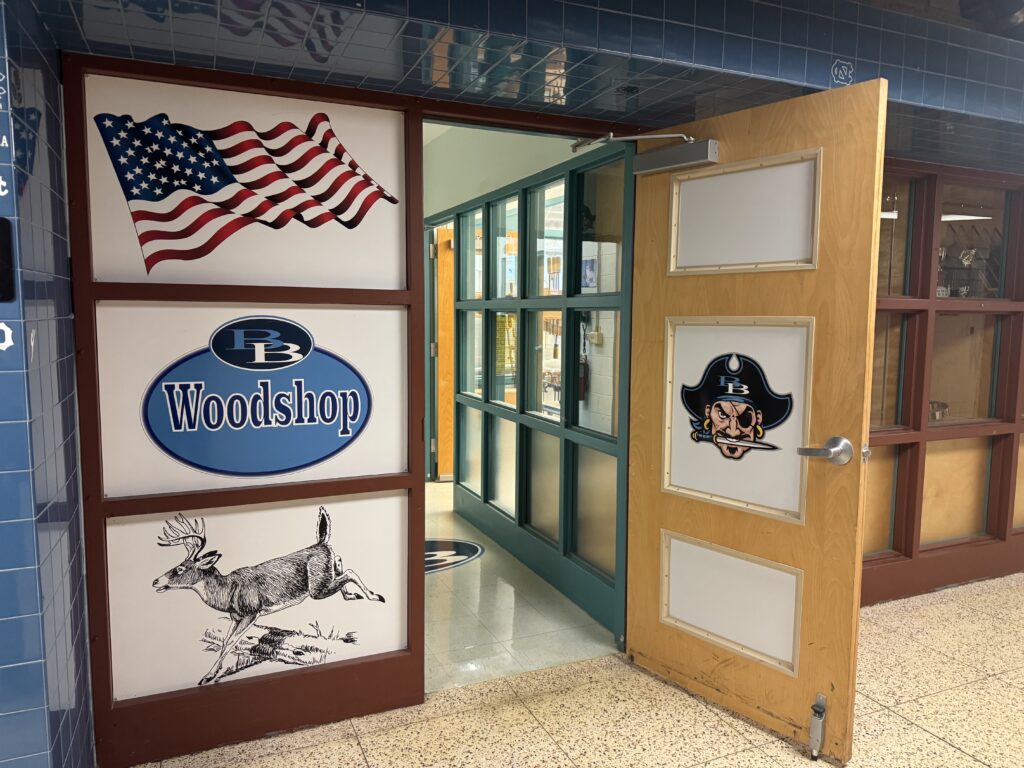
Student-designed graphics that were turned into stickers throughout the school
Darcy also showed me student-created designs and graphics displayed throughout the building. Students had designed stickers, logos, and visual elements used around the school. The environment itself reflected student creativity and ownership.
You could hear how proud she was of her students while she talked about their work. That pride felt woven throughout the building.
Leaving With Perspective Instead of Answers
What I walked away with most from this experience was not some perfect model for leadership or some grand realization about schools. Instead, I walked away with a deeper appreciation for how human this work really is.
School leaders are constantly balancing competing priorities. They are trying to support students while managing systems. They are trying to create change while maintaining trust. They are trying to protect time for meaningful work while responding to nonstop interruptions and crises.
And through all of that, they are still trying to make students feel seen.
That was probably the biggest thing I noticed while walking the hallways at Burrell. Students were known there. Their accomplishments were celebrated. Their interests mattered. Their stories mattered.
I came into this experience hoping to better understand what it means to lead inside a school building. I left with a much greater appreciation for just how emotionally demanding, relational, and complex that work truly is.
Not because anyone told me.
Because I got to watch it happen in real time.
Check out these toolkits connected this story






About the Author
Ling brings over a decade of experience in education, youth advocacy, and trauma-responsive practice. Her work has focused on supporting young people furthest from opportunity while partnering with educators and leaders to create more equitable and connected communities. Ling is passionate about helping leaders build spaces where students feel heard, valued, and supported.
Stay in the Loop
Subscribe to Our Newsletter








Responses