
Leading with Transparency: Closing the Feedback Loop with Purpose


Learners need endless feedback more than they need endless teaching.
– Grant Wiggins

INTRO
Collecting feedback is a critical part of leading a school, but what matters most is what we do with that feedback. When we ask for input, we create an expectation that every voice will be heard and considered. Following through by clearly communicating what decisions were made—and how that feedback shaped them—builds trust, reinforces transparency, and models the kind of responsive leadership we want to see at every level of our system. Closing the feedback loop isn’t just good practice; it’s essential to building a culture where collaboration drives meaningful action.
OBJECTIVES
- Recognize the impact of closing the feedback loop
- Discover how to build trust through transparent communication
Closing the feedback loop means coming back to staff, students, and families after gathering their input to share what you heard, what decisions were made, and why. It is a simple but powerful leadership practice that builds trust, transparency, and shared ownership. When people see that their feedback matters and leads to real action, they feel valued and invested. When feedback goes unanswered, trust fades and engagement drops. Closing the loop turns listening into leadership. It shows that every voice counts and that input does not just disappear but helps drive meaningful change.
Best Practices
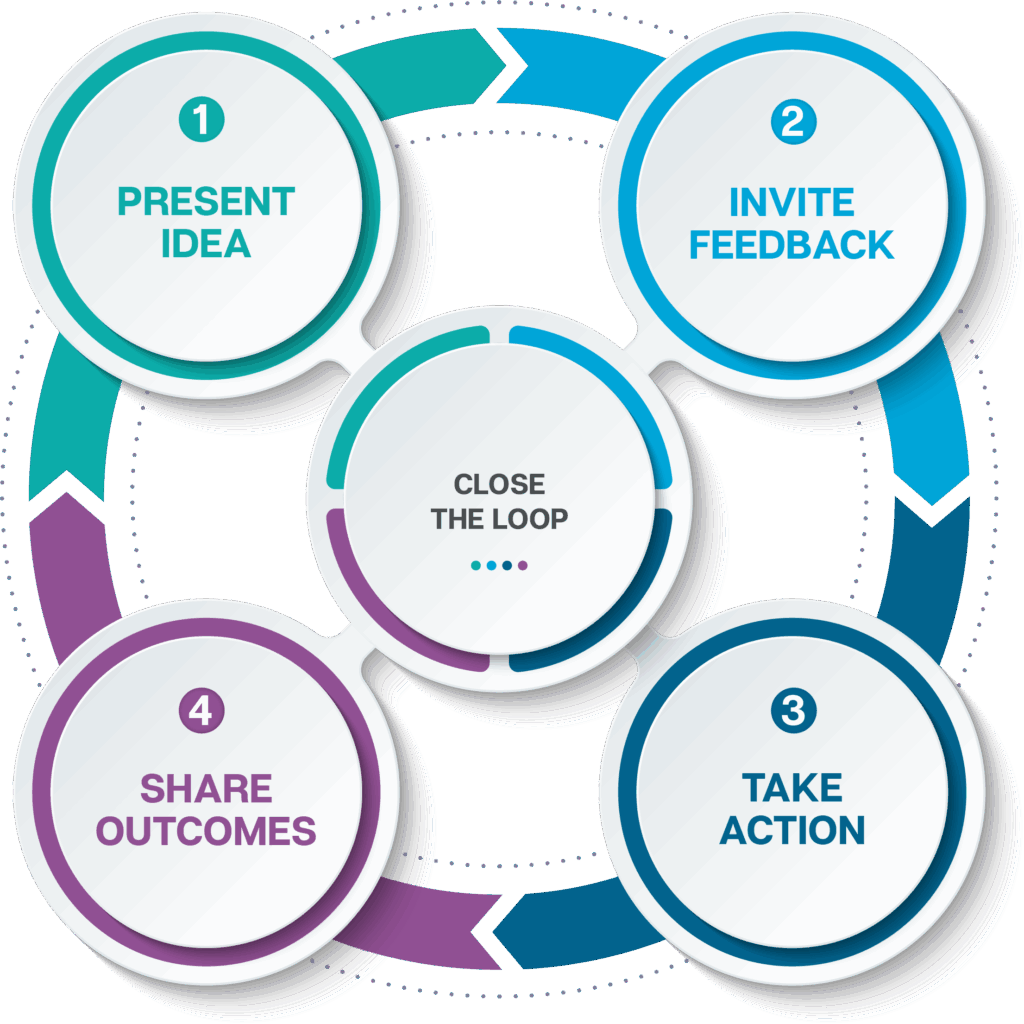
Listen4Good, a nonprofit capacity-building initiative that supports organizations in developing equitable, client-centered feedback loops, outlines the following best practices for closing the feedback loop:
- Choose a clear communication method or tool.
- Use clear language.
- Remember less is more.
- Don’t let the perfect be the enemy of the good.
Closing the Feedback Loop with Students

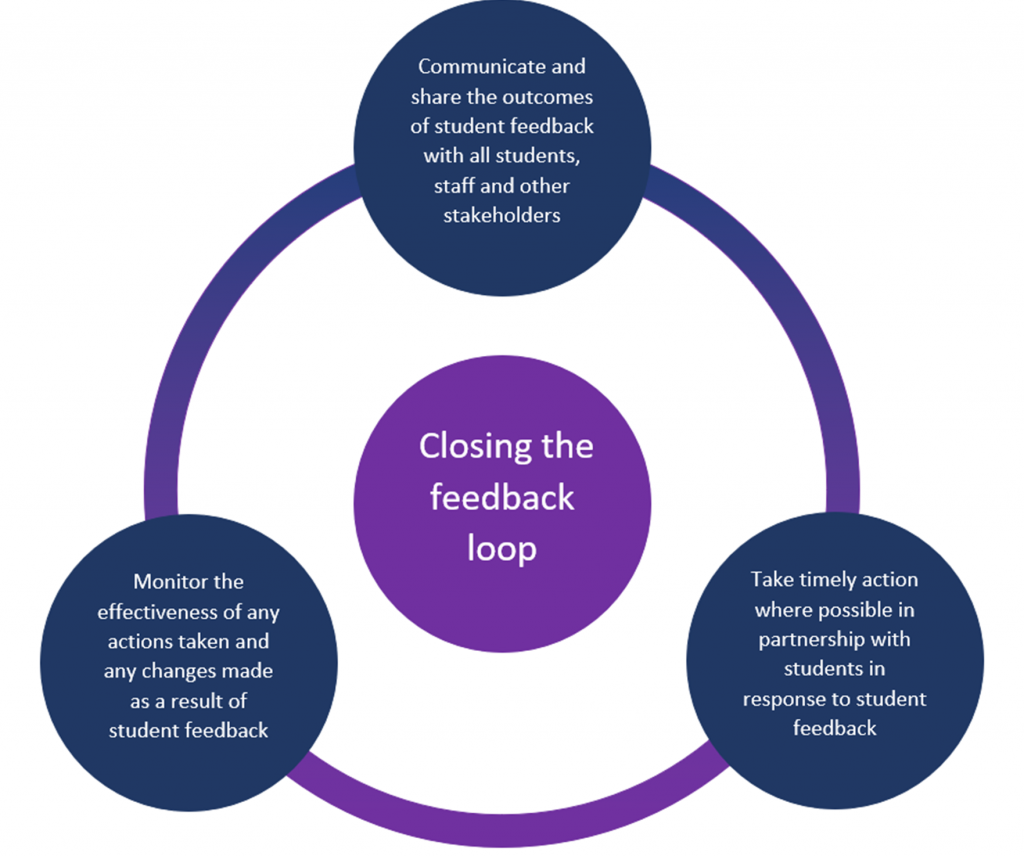
The University of Reading provides a clear framework for closing the feedback loop with students. Their approach emphasizes returning to students after collecting feedback to share what was heard, how the feedback is being used, and why certain suggestions may or may not move forward. This kind of transparency, paired with timely and accessible communication, helps students see that their input matters and makes a difference.
The framework highlights several core practices:
- Focus on key themes rather than addressing each individual comment.
- Explain decisions clearly—including both what will and won’t change—and the reasons behind them.
- Respond promptly so the feedback feels relevant.
- Use familiar communication channels such as class time or online platforms.
- Encourage ongoing input to support continuous improvement.
By closing the loop with students, we reinforce a culture of mutual respect, responsiveness, and shared responsibility for the learning experience.
Conclusion
Whether we are adjusting school schedules, refining professional learning, or improving student supports, closing the feedback loop helps ensure that the people closest to the work feel heard, respected, and included. It shows that feedback is not collected as a formality but as part of an ongoing conversation that leads to meaningful decisions and real change.
When we lead with transparency and follow-through, we model the kind of learning-centered, collaborative culture we want to see in every classroom and every corner of our schools.
Looking for protocols to gather feedback? Check out the Toolkits below.

Building Shared Understanding Through Feedback: Strengthening Feedback Practices

Leading with Transparency: Closing the Feedback Loop with Purpose

Listening is Leadership: Elevating Student Voice to Transform School Culture

Making Evaluation Meaningful and Supportive

Encourage Feedback and Build Consensus: Use the Fist to Five Protocol to Guide Decisions

Creating Shared Approaches: Tuning Protocol for Building Consensus
Stay in the Loop
Subscribe to Our Newsletter









Responses