Making Evaluation Meaningful and Supportive


“This process may be meaningful to you, but it’s not the most important thing to me.”
“I’m sorry, David, but I don’t think you have anything to offer me.”
These two comments—from teachers in different schools—landed hard. One arose during a dissertation interview; the other, unprompted, in a pre-observation conference in my first year as an assistant principal. Just under 30 and new to administration, I got the message loud and clear: teacher evaluation often feels irrelevant in practice.
OBJECTIVES
- Analyze the limitations of conventional teacher evaluation practices.
- Recognize the influence of motivation, expertise, and disposition on teacher effectiveness.
- Design evaluation approaches that are responsive to individual teacher needs.
Why Evaluation Falls Flat
Conceptually, evaluation shapes careers and advancement. In reality, it rarely leads to significant outcomes. Few teachers receive unsatisfactory ratings, and tenured teachers are seldom dismissed—typically only when serious misconduct occurs. This is understandable. Evaluation is often vaguely written into policy and tightly limited by bargaining agreements designed to protect teachers from arbitrary or ill-informed judgments.
The Leadership Imperative
The real challenge for school leaders is not conducting evaluation—it’s using it to drive improved practice aligned with the school’s vision. Through the Inflexion lens, that means integrating Shared Identity, Shared Purpose, and a Shared Vision for Readiness into the evaluation process.
Understanding the Person Behind the Practice
Effective evaluation starts with understanding what drives a teacher and how they work:
- Motivation: What compels their behavior—creativity, fear, success, energy preservation?
- Expertise: Their ability to teach content effectively to a range of learners.
- Disposition: Their underlying mindset and character—how they approach growth, feedback, and challenge.
Motivations can fuel or block growth. Defensiveness or complacency, for example, are dispositions that may need intentional support.
Want to learn more about motivation? Check out this toolkit.
Four Archetypes in Action
Meet the Teachers
To illustrate different combinations of motivation, expertise, and disposition, consider these composite teacher types:
| Jerome: “Put me in, Coach!” Motivation: Eager to excel and contribute. Expertise: Strong content knowledge, weak classroom management. Disposition: Open and eager to learn. | Patricia: “I’ve done my time.” Motivation: Focused on student learning. Expertise: Effective with most students; strong adolescent rapport. Disposition: Protective of autonomy. |
| Mary: “Is it Friday yet?” Motivation: Minimal effort. Expertise: Weak in both content and pedagogy. Disposition: Defensive, avoids conflict. | Sergio: “What can I do to help?” Motivation: Takes pride in doing well. Expertise: Excellent, integrated pedagogy and content. Disposition: Generous and growth-oriented. |
Grounding Feedback in What Happens in the Classroom
Effective feedback must be based on observable, relevant evidence. Depending on contractual agreements, sources may include:
- Full-period observations
- Brief walk-throughs
- Learning walks
- Student work samples or authentic assessments
- Teacher-generated work expectations
- Grade distributions
You cannot change what you are not aware of, and once you are aware, you cannot help but change.
-Sheryl Sandberg
Start With the Person, Not Just the Practice
Too often, evaluation zeroes in on instructional strategies or student data while overlooking the person behind the practice. To make evaluations meaningful, leaders must begin with who the teacher is—not just how they teach.
While goal-setting meetings may reveal surface-level insights, deeper understanding comes from intentional conversations. These tools can help uncover motivation and disposition while building trust:
- Empathy interviews that prioritize listening and connection
- Reflective conversations that invite teachers to assess their own practices and assumptions
- Linking personal motivations to professional goals to illuminate how identity shapes instruction
Used thoughtfully, these are more than strategies—they are invitations to authentic dialogue. When teachers feel seen and understood, they engage in the evaluation process as partners, not subjects.
Want to learn more about empathy interviews?
Check out these resources.
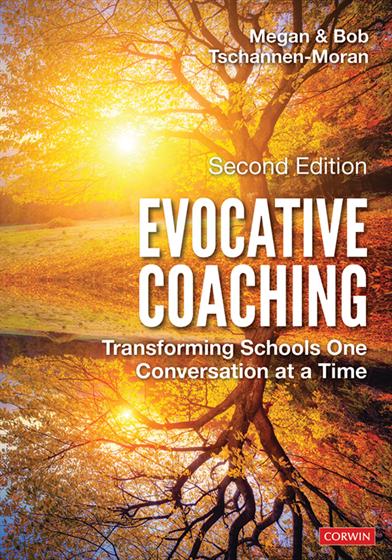
Challenging times demand we change how we teach, and research shows that coaching is the best way to bring about robust change in instructional practice. The second edition of Evocative Coaching helps skillful coaches develop trust and unearth the values and fears that both motivate and block teachers from achieving all that they hope.
A Transparent Approach & Tailoring Support to Teacher Needs
This leads to a critical tension: How do leaders build trust, support growth, and still deliver a final evaluative judgment?
Transparency is essential. Consider opening the process with a statement like:
“I want to support you in becoming the best teacher you can be. I’m committed to your success. I’m also required to provide a summative evaluation at the end of this cycle. My goal is that there will be no surprises.”
As evidence accumulates, the evaluator must prioritize and sequence feedback strategically:
| Jerome needs classroom management skills and pedagogical mentoring. Assigning him a manageable, student-centered project could sustain his motivation and connect him to the school’s vision. | Patricia seeks instructional insight. Starting with a respectful, evidence-based review honors her experience and can re-ignite a desire to mentor others or reengage with the school community. |
| Mary may benefit from an empathy interview to surface lost passion or career fatigue. With trust, frank conversations about impact and options, including potential career shifts, are vital. | Sergio is ready to lead. A collaborative evaluation process might involve a school-wide professional learning initiative aligned with his strengths, with minimal bureaucratic overhead. |
Strengthening Practice, Building Trust
When done well, evaluation becomes a platform for both personal and professional growth. For teachers, it’s a chance to reflect, improve, and connect. For administrators, it’s an opportunity to grow as instructional leaders.
Through meaningful dialogue, focused observation, and thoughtful feedback, evaluation can move from a checklist to a catalyst. That’s a win-win worth pursuing.

This work by Inflexion is licensed under Creative Commons Attribution-NonCommercial-ShareAlike 4.0 International


Stay in the Loop
Subscribe to Our Newsletter







Responses