
A Warm Welcome: Ideas for Your Week of Welcome

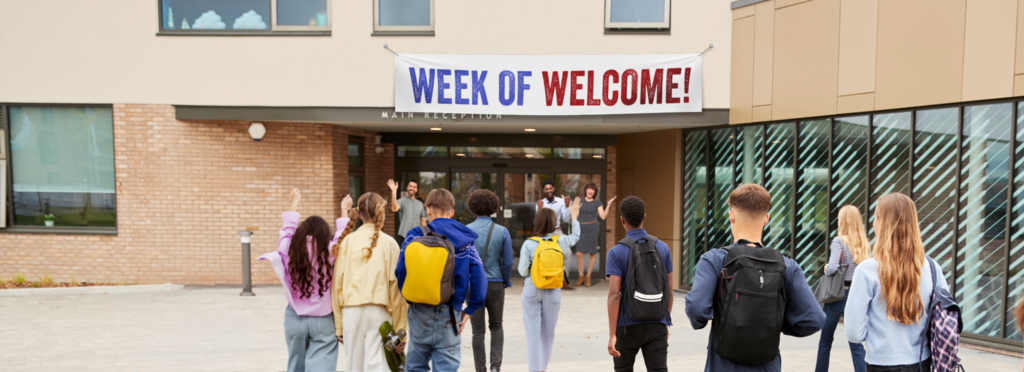
The first days of school come with a familiar sense of urgency.
There are schedules to distribute, procedures to explain, materials to organize, standards to address, and plenty of content waiting to be taught. For teachers who already feel the pressure of a packed curriculum, every instructional day can seem precious.
But what if one of the most important things a school can do at the beginning of the year is slow down?
OBJECTIVES
- Build meaningful connections from day one
- Create a strong sense of belonging
- Establish shared expectations and community
- Help every student feel known and valued
- Set the foundation for learning all year
In one school community, the first days of the year began not with academic content, but with connection. Through a practice they called Week of Welcome, teachers dedicated the opening days of school to getting to know their students and helping students get to know one another. Together, they established expectations, built community, and created a foundation for the learning that would follow.
The premise was straightforward: Before asking students to engage deeply in learning, create the conditions that help them feel ready to engage.
That means investing time in relationships.
Relationships Are Part of Learning
School connectedness is more than whether students enjoy coming to school. The Centers for Disease Control and Prevention describes connectedness as students feeling that adults and peers at school care about them as individuals and about their learning. Connected students feel cared for, supported, valued, and that they belong.
Those feelings matter. Students who feel connected to school are more likely to attend regularly, earn higher grades and test scores, and graduate from high school.
Search Institute’s research on developmental relationships reinforces this connection. Its framework encourages adults to express care, challenge growth, provide support, share power, and expand possibilities for young people. Research from the organization has connected stronger student-teacher relationships with belonging, motivation, engagement, and academic outcomes.
Educator Rita Pierson brought this idea to life in her widely viewed TED Talk, Every Kid Needs a Champion. Drawing on four decades in education, Pierson spoke about the importance of relationships in learning and the difference it makes when students know there is an adult in their corner. Her message is a powerful reminder that connection is not separate from the work of teaching. It is part of it.
That idea sits at the heart of a Week of Welcome. Relationships and rigorous learning are not competing priorities. Relationships help create the conditions for rigorous learning.
A Week of Welcome gives teachers dedicated time to begin building those relationships before the pressures and routines of the year take over.
Instead of beginning with, “Here is what you need to learn,” teachers have an opportunity to begin with, “Who are you, and how are we going to learn together?”
Belonging and Expectations Go Together
Focusing on relationships does not mean lowering expectations. A strong beginning should accomplish the opposite.
Students need to hear both “You belong here” and “We believe you can succeed here.”
The beginning of the year is an opportunity to establish what a school community believes about its students and what it means to be part of that community. This does not have to begin with a list of rules.
In an Edutopia article, John Duffy shares an approach that begins by asking students to imagine the last day of class. How do they want to feel when they leave? What do they hope will be true about the community they have built together? Students use their responses to help develop shared norms and goals for the year.
It is a small shift, but an important one. Instead of only telling students how they are expected to behave, the conversation invites them to think about the community they want to help create.
For schools with shared maxims, this kind of conversation can also provide a natural opportunity to connect those words to students’ hopes for the year. The goal is not to memorize another set of expectations. It is to give students and adults shared language for how they want to learn, work, and be together.
What are maxims?
Maxims are statements that act as a school’s core drivers to equip and empower every student to pursue their passion, interests, and aspirations. They are used to highlight the areas of hidden strength already within a school. They can also be used as aspirational statements to reinforce the promises your school makes to the community. Maxims should be displayed widely and built into the daily curriculum, as a whole or in part, to familiarize your students and staff with them and embed them into the school culture.
No significant learning can occur without a significant relationship.
-Dr. James P. Comer
A Week of Welcome can send a powerful message to students: We will know you. We will listen to you. We will support you. We will expect you to grow. And you have a role in creating this community, too. That last part matters because belonging is not something adults simply provide for students. Students help shape the classroom and school environments they inhabit.
Teachers can create space for that ownership by asking students what helps them participate, what gets in the way of learning, how classmates should respond when someone makes a mistake, or what respect looks like in practice. Conversations like these help establish expectations while giving students a meaningful role in building the community they are joining.
For school leaders, this shifts the focus of Week of Welcome from a collection of first-week activities to a shared student experience. Rather than asking only what teachers should do during the first week, leaders can ask, “What do we want every student to experience during their first days in our school?” Perhaps every student leaves the week knowing there is an adult they can turn to for help, believing their teachers want to know them as people, understanding what is expected of them, and knowing they have something valuable to contribute.
That distinction can help shift the conversation from activities to outcomes. Perhaps every student should leave the first week knowing there is an adult they can turn to for help. Perhaps they should believe their teachers want to know them as people, understand what is expected of them, and feel that they have something valuable to contribute.
Holyoke Public Schools in Massachusetts offers one example of what this kind of shared focus can look like. The district created a first-quarter playbook that gave educators common priorities for the opening weeks of school, including greeting students by name, building relationships, establishing routines, and connecting learning to students’ interests. The playbook helped create a common focus across the school community.
That is an important distinction for leaders. Relationship building does not have to depend solely on the instincts or practices of individual teachers. When a school establishes a shared intention for how students should experience the beginning of the year, connection can become something students encounter throughout the building.
Starting With Intention
Protecting time for connection can feel difficult when calendars are already full and academic expectations are high. But a Week of Welcome is not time apart from learning. It is time spent creating the relationships, routines, and sense of belonging that can support learning throughout the year.
A Week of Welcome asks schools to protect meaningful time for connection before the pace of the academic year takes over. Whether that means the first week or the first two weeks, the commitment is the same: Give students and teachers the time to know one another, build community, and establish how they want to learn and work together. Those opening weeks create the foundation, but relationships continue to grow throughout the year.
As your leadership team prepares for the start of school, consider one question: If we could listen to our students at the end of their first week, what would we hope to hear? Maybe it is simply this: My teachers know who I am. There are people here who will help me. I know what is expected of me. I have something to contribute. I can be successful here. I belong here.
What would students need to experience for those words to feel true?
Sometimes moving learning forward begins by making sure students know they have a place where they belong.
Stay in the Loop
Subscribe to Our Newsletter








Responses