
Reimagining Readiness: What One Student’s Experience Can Teach Us

What does it truly mean for students to be ready?
For many schools, readiness is still defined by what students know and how they perform on assessments. Yet, in classrooms and communities across the country, school leaders are seeing a different picture emerge. Students need more than knowledge. They need purpose, connection, and the ability to apply their learning in meaningful ways.
OBJECTIVES
- Students develop a clearer sense of purpose
- Students take greater ownership of their learning
- School culture reflects shared responsibility
- Students are better prepared for life beyond school
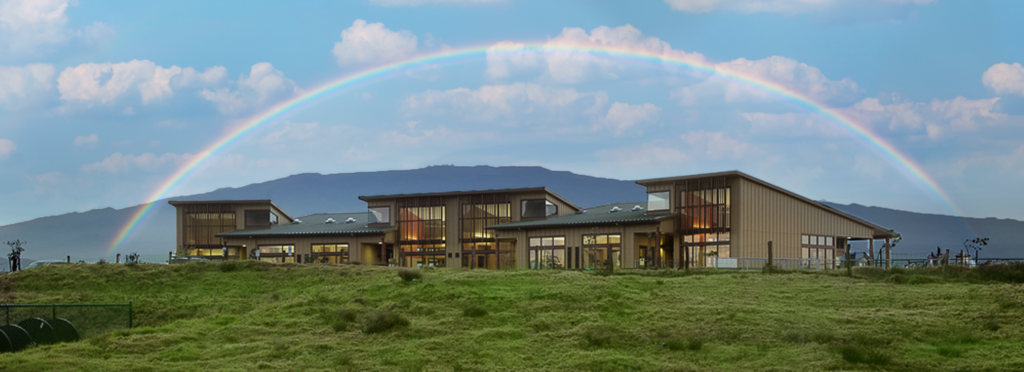
At Kanu o ka ‘Āina, a Native Hawaiian immersion public charter school in Waimea on Hawai‘i Island, this broader vision of readiness is not theoretical. It is built into the daily experience of students.
Kanu serves a student population that is predominantly Native Hawaiian and has consistently outperformed other schools in the state across a range of student performance measures. The school reports a 100 percent graduation rate, and in one cohort, 70 percent of graduates enrolled in college, compared to a statewide rate of 40 percent for Native Hawaiian students. Students also participate in dual credit coursework at high rates, further expanding their postsecondary opportunities .
What stands out, however, is not only the outcomes, but how students experience learning along the way.
A Learning Experience That Stays With Students
Kanoa, a senior at Kanu, first learned about coral reef bleaching through another student’s presentation and later saw its effects firsthand during a diving trip in a local bay. He later recounted those experiences in reference to the Hawaiian cultural value of kuleana, or responsibility. Embedded across learning, this sense of responsibility to himself and to the natural environment, reinforced through hands-on learning and internships, fueled his drive to study marine biology in college.
His learning did not happen in isolation. It developed over time, across experiences that connected classroom knowledge, real-world observation, and personal reflection.
At Kanu, this kind of learning is not unusual.
Students split their time between traditional classroom learning and “in the field” experiences, working on student-driven, community-based projects that require collaboration and collective effort . Ideas introduced in one setting are explored further in another, allowing learning to deepen rather than end with a single lesson.
Kanoa’s story reflects that continuity. Learning is not something students complete. It is something they carry forward.
A Culture That Builds Responsibility
That continuity is not accidental. It is supported by a culture that consistently reinforces responsibility.
At Kanu, students are encouraged to think about their actions in relation to themselves, their families, their communities, and the world. This system of kuleana is reinforced across the student experience, including through structures like student-led conferences and community-based learning .
Students are not simply completing assignments. They are developing a sense of responsibility and ownership that influences how they approach learning and their future.
Are we trying to develop students to fit into our world, or are we hoping that students feel they have the power to create a better world both now and in the future?
– George Curous
Naming What Is Already Happening
Experiences like Kanoa’s often exist in schools, but they are not always clearly defined or consistently designed for. This is where a framework can provide clarity.
Nā Hopena A‘o, often referred to as HĀ, outlines a set of learning outcomes rooted in Native Hawaiian culture and values, focusing on the development of the whole learner. These outcomes include belonging, responsibility, excellence, aloha, total well-being, and connection to place.
While Kanu does not explicitly organize its work around this framework, Kanoa’s experience brings these outcomes into focus.
His learning begins with connection. He is introduced to an idea through a peer, reflecting a learning environment where student voice and shared experiences matter. That exposure becomes something more when he encounters it again in the real world, deepening both understanding and relevance.
As he reflects on these experiences through the lens of kuleana, he begins to see his learning in terms of responsibility, not just knowledge. That sense of responsibility is not isolated. It is reinforced through continued hands-on learning and internships, allowing him to apply what he knows in meaningful contexts.
Over time, this progression, from exposure, to experience, to reflection, to action, illustrates how multiple outcomes develop together. There is a growing sense of belonging within the learning community, an increasing responsibility for one’s role in the world, and a clear connection between learning and future direction.
Nā Hopena A‘o helps make this progression visible. It gives language to outcomes that might otherwise remain implicit, helping educators recognize and intentionally design for the kinds of experiences that shape students in lasting ways.
The framework does not add something new to this story. It helps clarify what is already present.
What This Means for School Leaders
Kanoa’s experience is not the result of a single program. It reflects a system where learning is connected, reinforced, and meaningful over time.
For school leaders, that raises important considerations:
- Where do students encounter ideas that stay with them beyond a single lesson?
- How often do they apply their learning in real and relevant contexts?
- What structures help students develop a sense of responsibility for their learning and their community?
Kanu offers one example of how these elements can come together. Nā Hopena A‘o offers a way to describe and organize them.
Together, they point to a broader understanding of readiness. One that is not defined solely by what students know, but by how students grow, what they carry forward, and what they are prepared to do next.
Stay in the Loop
Subscribe to Our Newsletter

About the Author
Dr. Matt Coleman is the CEO of Inflexion, where he leverages his deep-rooted expertise in school systems change to drive impactful educational reform. With a career spanning various roles—from educational assistant to assistant superintendent—Matt’s experience encompasses every level of secondary education.








Responses